As we age, maintaining strength, balance, mobility, and confidence becomes increasingly important. Many people over 60 begin looking for activities that improve physical health without placing excessive strain on the body. One traditional karate stance that offers remarkable benefits for older adults is Shiko Dachi, often known as the “sumo stance” or horse stance variation.
At Gakusei Karate, we believe karate training can be adapted safely and effectively for every age group including complete beginners in their 60’s, 70’s and beyond.
What is Shiko Dachi?
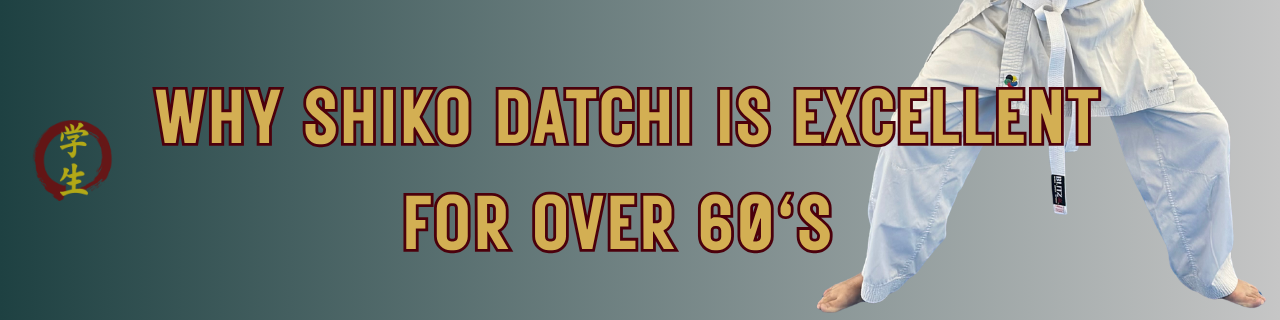
Shiko Dachi is a wide, stable stance used in many traditional karate styles. The feet are turned outward, knees bent, and the body remains upright. While it may appear simple, this stance develops several key physical qualities that are especially valuable for older adults.
- Improves Balance and Stability
One of the biggest concerns as we age is the risk of falling. Shiko Dachi strengthens the muscles responsible for stability in the hips, thighs, knees, and ankles.
By regularly practising this stance, older adults can improve:
- Postural control
- Weight distribution
- Coordination
- Lower body stability
The wide base of the stance trains the body to remain grounded and controlled, which can help with everyday activities such as walking, climbing stairs, or standing from a seated position.
- Strengthens the Legs Safely
Leg strength naturally declines with age if it is not maintained. Weak leg muscles can affect independence and confidence.
Shiko Dachi works:
- Quadriceps
- Glutes
- Hamstrings
- Inner thigh muscles
- Calves
Unlike heavy gym exercises, the stance can be adjusted to suit individual ability levels. Even a shallow version of the stance provides benefits while remaining low impact on the joints.
- Supports Joint Mobility
Gentle movement into and out of Shiko Dachi encourages mobility in:
Maintaining joint mobility is essential for healthy ageing. Controlled karate movements help keep the body moving without the repetitive impact associated with some other forms of exercise.
Many older students find that consistent practice helps reduce stiffness and improves everyday movement patterns.
- Develops Core Strength and Posture
Good posture becomes increasingly important later in life. Shiko Dachi requires practitioners to maintain an upright spine and engaged core muscles.
This can help improve:
- Postural alignment
- Core stability
- Back support
- Body awareness
Better posture may also help reduce muscular tension and improve confidence in movement.
- Encourages Mental Focus and Confidence
Karate training is not only physical, it also develops concentration, discipline, and self-confidence.
Holding and moving through Shiko Dachi requires:
- Focus
- Breathing control
- Patience
- Coordination
For many over 60’s students, karate provides a renewed sense of achievement and personal growth. Learning traditional techniques and improving gradually can be incredibly rewarding.
- Adaptable for All Fitness Levels
One of the greatest advantages of karate training is that it can be modified for the individual.
At beginner level, Shiko Dachi can be practised:
- At a comfortable depth
- With support nearby if needed
- For short time periods initially
- At a slow and controlled pace
Over time, strength and endurance naturally improve.
Karate After 60: It’s Never Too Late to Start
Many people believe martial arts are only for the young. In reality, traditional karate offers tremendous benefits for older adults when taught correctly and safely.
At Gakusei Karate, our classes focus on:
- Functional movement
- Confidence building
- Safe progression
- Supportive training environments
- Traditional martial arts values
Whether your goal is fitness, mobility, self-defence, or simply trying something new, karate can be an excellent lifelong activity.
Final Thoughts
Shiko Dachi may look like a basic karate stance, but its benefits for over 60’s are substantial. From improving balance and leg strength to enhancing posture and confidence, this traditional movement supports both physical and mental wellbeing.
Karate is not about being the fastest or strongest, it is about continual improvement at your own pace.
And sometimes, that improvement begins with simply learning how to stand strong.